













Oscar Spin Casino Reviews In Italy

In 2026, Oscar Spin in Italy is evaluated based on account, payments, games, support, and control tools for adults.

Fortune Gems 2 Slot

Table of Contents

  • The Dog House Megaways Slot
  • Lucky Joker 10 Extra Gifts Slot
  • Sword of Ares Slot
  • Floating Dragon Hold & Spin Slot
  • Leprechaun Riches Slot
  • Fruit Cocktail Slot
  • The Dog House Megaways Slot
  • Sword of Ares Slot
  • Fruit Million Slot
  • The Dog House Megaways Slot
  • Big Fisherman Slot
  • Big Fisherman Slot
  • Seven Books Unlimited Slot
  • Oscar Spin Fortune Slot
  • Sword of Ares Slot
  • Floating Dragon Hold & Spin Slot
  • 9 Mad Hats Slot
  • Floating Dragon Hold & Spin Slot
  • Big Bass Splash Slot

How to Read an Evaluation with a Cool Head

Reading a review on a gaming platform seems easy, but it's rarely truly so. The problem isn't finding opinions: the problem is understanding which ones truly help and which ones just add noise. In 2026, it makes more sense to observe concrete factors - access, account structure, clarity in money movements, phone usage, break tools - rather than stopping at the first impression.

Reviews 1

Imagine a common scene. You open your account in the evening, scroll through two screens, see a promotion or well-made graphics, and think you've understood everything. In reality, you've understood very little. A serious evaluation only arises when you try to do the things that truly matter: registering, reading your profile, understanding payments, navigating menus, and seeing if the platform keeps you in control.

Many adult users in Italy look for a clear judgment, almost like a traffic light: yes or no. However, real use doesn't work that way. A platform might seem convenient at first and become confusing when you look for history. Or it might appear sober in the first few minutes but turn out to be much more organized after using it for a few days. Therefore, it's advisable to read every evaluation as an operational report, not as a slogan.

Oscar Spin Review: What Really Matters

When a review is useful, it usually talks about simple and real actions. It explains if the account is understandable, if payments are clear, if the profile is logical, and if support responds to well-formulated requests. Imagine comparing two texts: the first only says everything is beautiful, the second describes how a user navigates through profile, balance, limits, and history. The second is much more useful because it shows you the process, not just the mood.
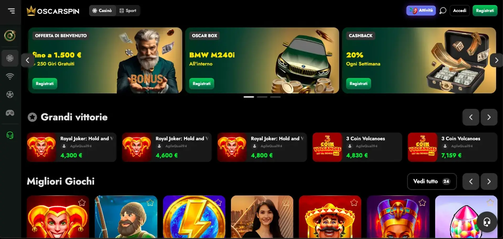
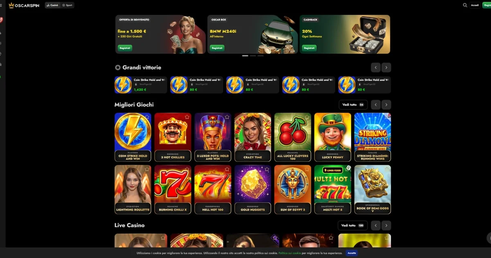
First Impression: Account, Menu, and Path Logic

The first impression should serve for orientation, not for rushing. When you enter for the first time, the most sensible thing isn't to choose a game immediately. It's to understand where the sections you'll actually use are located: profile, balance, transactions, payments, documents, personal limits, assistance. If this structure is clear, the platform starts well. If, on the other hand, you have to guess every step, the experience becomes complicated even without technical problems.

customer feedback 2

Imagine you have ten minutes free before going out. If in the first two minutes you understand how the account is organized, you'll use the rest of the time well. If, instead, you waste it looking for a section or going back between similar screens, the session starts with unnecessary friction. Is it a detail? No. It's precisely one of the points that reveals whether a platform is designed for adult and orderly use.

Those who usa these platforms for a while almost always develop the same habit: first, they check the overall picture, then they decide what to do. Balance, notifications, history, settings. Only then comes the game. It's a small routine, but it makes a big difference because it reduces impulses and increases the readability of the session.

3 reviews

Account Opening and First Operational Steps

Registration should be quick, but not hasty. Correct name, active contact details, consistent date of birth, a password that is readable for you and not too simple: these are seemingly trivial steps. Almost all annoying problems arise from carelessly entered data, not from complex obstacles. Once the account is opened, it makes much more sense to sort out the personal area immediately rather than diving into the catalog.

Imagine completing the registration from your phone while replying to other messages. This is the classic situation where an email is written incorrectly, a number is outdated, or a credential is saved confusingly. Nothing happens at the moment, but later, a verification or an interrupted login will show how much those details matter.

The most cautious users do one simple thing: after registration, they spend two minutes in their profile and check that everything is in order. It doesn't seem like an exciting choice, but it's the one that saves the most time later.

Small Errors That Slow Everything Down

The most frequent errors are not spectacular. A no-longer-used contact detail, a hastily entered piece of information, an illegible document, a password that you can't distinguish well when you need to re-enter it. Imagine a user who completes everything in a few minutes and closes satisfied. The next day, they log back in and discover they already have to correct something. To avoid this scenario, just treat registration like a real form, not like any click.

Oscar Spin Review and Reading the Profile

A good profile isn't judged by its design but by its clarity. Can you quickly find your personal data? Do you know where recent transactions are? Do you understand how to change settings or find help? Imagine wanting to change a preference or review an operation from the previous day. If it only takes a few steps, then the profile is logical. If, instead, you start navigating through vague menus, the account loses practical quality.

Money Movements and Checks Before Confirming

Payments are the part where a platform stops seeming theoretical and becomes concrete. Depositing, checking the balance, re-reading a transaction, or requesting a withdrawal are actions that immediately test the account's order. As long as you read a homepage or scroll through a catalog, everything can seem simple. But when you touch the money, you understand if the structure is truly clear.

The most useful rule is also the most ignored: stop for thirty seconds before confirming any operation. Look at the amount, the selected method, the account status, and the reason for the choice. Four quick checks. It seems like little, but almost everyone skips them when the decision is driven by haste or the desire to fix a session that isn't going as planned.

Imagine a late evening when you get the idea to make another move just to change the tone of the session. At that moment, the phone's speed works against you. If you don't clearly ask yourself why you're doing it, the risk is that the technical gesture becomes an impulsive one.

A simple scheme can help a lot:

Area to Check

What to Verify

Why It Is Useful

Profile

dati coerenti e recapiti attivi

evita correzioni all'ultimo minuto

Chosen Method

disponibilità reale e intestazione

riduce tentativi inutili

History

ultimo movimento registrato

chiarisce lo stato del conto

Documents readability and completeness facilitates checks spending thresholds and breaks keeps the session tidy

leggibilità e completezza

facilita le verifiche

Personal limits

soglie di spesa e pause

mantiene la sessione ordinata

The table does not replace personal judgment, but it reminds you of one important thing: first check, then confirm. This is even more true when you usa your account from your phone, during short and distracted moments of the day.

What to Do Before a Deposit

Before adding funds, it's worth looking at three very concrete things: how much you really want to use, if that moment is suitable for an economic decision, and if the account is in order. Imagine you are tired, with your phone in hand, and you want to "fix everything" with another transaction. In that case, the problem is not the method. It's the reason that leads you to use it right then.

Daily Mobile Use and Experience Continuity

In 2026, many users will use their account more from their phone than from their computer. Therefore, it is not enough for the platform to be available on mobile. It must be truly convenient in the contexts where the phone is used: short breaks, waiting times, commutes, evenings on the sofa, quick checks before going out. In those moments, quality is not measured by visual effects, but by readability, speed, and order.

Imagine opening your account during a ten-minute lunch break. You want to see your balance, recent transactions, any notifications, and decide whether to do anything else or not. If a few taps are enough to understand everything, the mobile works. If each step requires more screens than necessary, the session becomes cumbersome even before it begins.

Continuity between devices also counts. A well-designed platform does not have to be identical on phone and computer, but it must maintain the same logic. Balance, history, profile, and support should remain easy to find in both cases. Otherwise, the user feels like they are using two different environments instead of just one.

Usually, more organized users enter the phone with a specific purpose, not out of habit. They check their account, decide, act, and then leave. This small difference changes a lot. The mobile, in fact, is convenient precisely because it shortens the time. However, if there is no clear objective, convenience easily turns into distraction.

Oscar Spin Casino Review and Mobile Usage

A good review should also explain this: what happens when the account is used realistically, from mobile, in moments when attention is not full. Imagine a user getting on a train, re-reading the balance, checking transactions, and deciding whether to stop there or continue. If the account holds up well in that context, the perceived quality increases much more than a simple elegant graphic would.

When Mobile Makes You Lose Track

The signal is not technical, it's behavioral. You open the account more times than necessary, tap screens without a clear purpose, re-read the balance as a reflex, and then leave without really knowing what you wanted to do. Imagine repeating this scene several times in the same day. At that point, the problem is not the phone itself, but the fact that you are using it without direction. A good platform should help you break this automatism, not feed it.

Games, Moment Choice, and Time Management

A useful review cannot stop at access or payments. It must also look at how the catalog meets the user's real-time needs. Some enter for a short session, some have more time to read and compare, some just want to check their account, and others are looking for a defined moment of entertainment. All these cases require different rhythms. When a platform does not help distinguish these rhythms, the user tends to do everything at once and get lost.

Imagine two situations. In the first, you have fifteen minutes, you are tired, and you just want a simple session. In the second, you have more time and want to carefully follow the account movements, perhaps alternating between checking and playing. If you treat these two situations the same way, the problem is not the catalog. It's the way you are entering. More experienced users quickly understand that available time counts at least as much as personal taste.

Therefore, it is always advisable to decide two things beforehand: budget and duration. Rigid formulas are not necessary. A framework is needed. If the money is already separated from other expenses and time has a boundary, the session remains more readable.

Knowing when to quit is also part of the quality of the experience. Many only think about how to start, almost no one about how to finish. Yet a truly successful session is often one that ends at the chosen point, not at the point where you are already tired or nervous.

Imagine realizing that you are opening new screens just to stay a little longer. It is one of the clearest signs that the account has stopped following your plan and you have started following it.

How to Choose a More Organized Session

The best question is simple: do I want a short session or a more thoughtful session today? If you have little time, it's best to choose little and stay linear. If you have more leeway, you can afford to pay more attention to reading the account and choosing games. This initial clarity is worth more than any impulse of the moment.

Support, Limits, and Final Service Evaluation

Assistance becomes important precisely when you don't know if the problem is with you or the platform. Therefore, it's best to identify it early and understand how to use it well. Writing "it doesn't work" is of little use. Describing the device, time, account section, attempted step, and on-screen message is much more useful. Not because the support must be perfect, but because a precise request allows for more concrete answers.

Imagine you need to clarify an interrupted login or a transaction you don't understand. If you come with the details already organized, you won't waste time reconstructing everything later. The most practical users do exactly this: first, they gather the facts, then they ask for help.

Next to support are the self-control tools. Spending limits, temporary breaks, suspensions, and similar functions should not be considered extraordinary. They are a normal part of mature account usage. They serve to maintain control of the session, especially at times when gambling risks becoming more automatic than chosen.

The final evaluation of Oscar Spin, for an adult user in Italy in 2026, should therefore arise from a chain of practical elements: login, profile structure, clarity in financial transactions, mobile quality, time management, break tools, and assistance. If this chain holds up in real-world situations, then the overall judgment improves for solid reasons and not due to momentary enthusiasm.

Oscar Spin Review Come Punto Di Arrivo

A truly useful review does not conclude with a 'yes' or 'no'. It concludes by explaining whether the platform, as a whole, leaves the user in control. Imagine a normal week: some logins from your phone, an evening session, a check of transactions, a moment when you need to stop. If in all these cases the account remains understandable, the evaluation has concrete foundations.

FAQ

Clarity is seen in the functions you actually use: balance, profile, history, payments, limits, and support. If you log in and find these elements without having to think too much, the account starts off well. It doesn't need to be spectacular. It's more important that it's readable in the first few minutes and in the real moments of the day.

It's worth checking often, not just when a doubt arises. The history helps reconstruct amounts, times, and the order of operations, but it also helps understand if the session followed the initial plan or not. For those who log in from mobile multiple times a day, it's a very useful tool to avoid confusion.

It depends on the task and the moment. The phone is practical for quick checks, balance, notifications, and essential steps, while the computer often helps to better read details and the profile. Neither is always better. The important thing is to use the device most suitable for what you really want to do at that moment.

Before opening the account, just stop and consider two questions: how much time do I have and how much do I want to use today? If the answers are clear, the session starts better. Those who log in without these two coordinates often end up opening too many screens, changing direction multiple times, and losing the thread within the first few minutes.

The most useful signs are practical: you start clicking without reading, you check your balance multiple times for no real reason, you extend the session beyond the decided time, or you feel the urge to recover immediately. You don't need to wait for a major incident. Often, the right time to stop comes much earlier, in the form of haste and repetition.

It is best to have consistent personal data, active contact details, a password that is readable for you, and a clear idea of your personal budget ready. It doesn't seem like much, but this preparation lightens almost everything that comes next: access, verification, payments, and account management.

The best way is to be concise but precise. You need to indicate what you were doing, on which device, in which area of the account, at what time, and with what message that appeared on the screen. This makes the request more useful and reduces lost steps. A generic message, on the other hand, often forces you to start over.